Dental Bridges in Hickory, NC
Missing teeth affect your smile, your ability to chew comfortably, and your long-term oral health. At Hickory Dentistry in Hickory, NC, dental bridges offer a proven, durable solution for replacing one or more missing teeth and restoring your smile’s full function and appearance. Call (828) 322-2977 to schedule your consultation and find out if a dental bridge is right for you.
Restore Your Smile with Dental Bridges in Hickory, NC
A missing tooth is about far more than a gap in your smile. When a tooth is lost and not replaced, the neighboring teeth begin to drift and tilt into the empty space, causing misalignment and bite problems. The tooth in the opposing jaw may also shift — a process called over-eruption — as it loses its natural contact point. Without a tooth root stimulating the jawbone, bone loss begins within months and progresses over time, gradually altering your facial contours. A dental bridge addresses all of these concerns by closing the gap, restoring function, and preventing the cascade of problems that follows tooth loss.
At Hickory Dentistry in Hickory, NC , we use high-quality, tooth-colored materials for all bridge restorations, ensuring results that look completely natural and blend seamlessly with your surrounding teeth. We serve patients from Hickory, NC and surrounding communities including Newton, Lenoir, Granite Falls, and Conover who are looking for a reliable, experienced dental team to restore their smile.
How Does a Dental Bridge Work?
A traditional dental bridge consists of one or more artificial teeth — called pontics — held in place by dental crowns cemented onto the healthy teeth on either side of the gap, known as abutment teeth. The bridge is fabricated as a single, connected unit that literally bridges the space left by the missing tooth or teeth. The process typically requires two appointments. During the first visit, the abutment teeth are gently prepared by removing a small amount of enamel to make room for the crowns, and impressions of your teeth are taken. A temporary bridge is placed to protect the prepared teeth while your permanent bridge is custom-fabricated in a dental laboratory. At your second appointment, the temporary bridge is removed, the custom bridge is checked for fit and color match, and then permanently cemented into place. With proper care, a well-made dental bridge can last 10 to 15 years or longer.
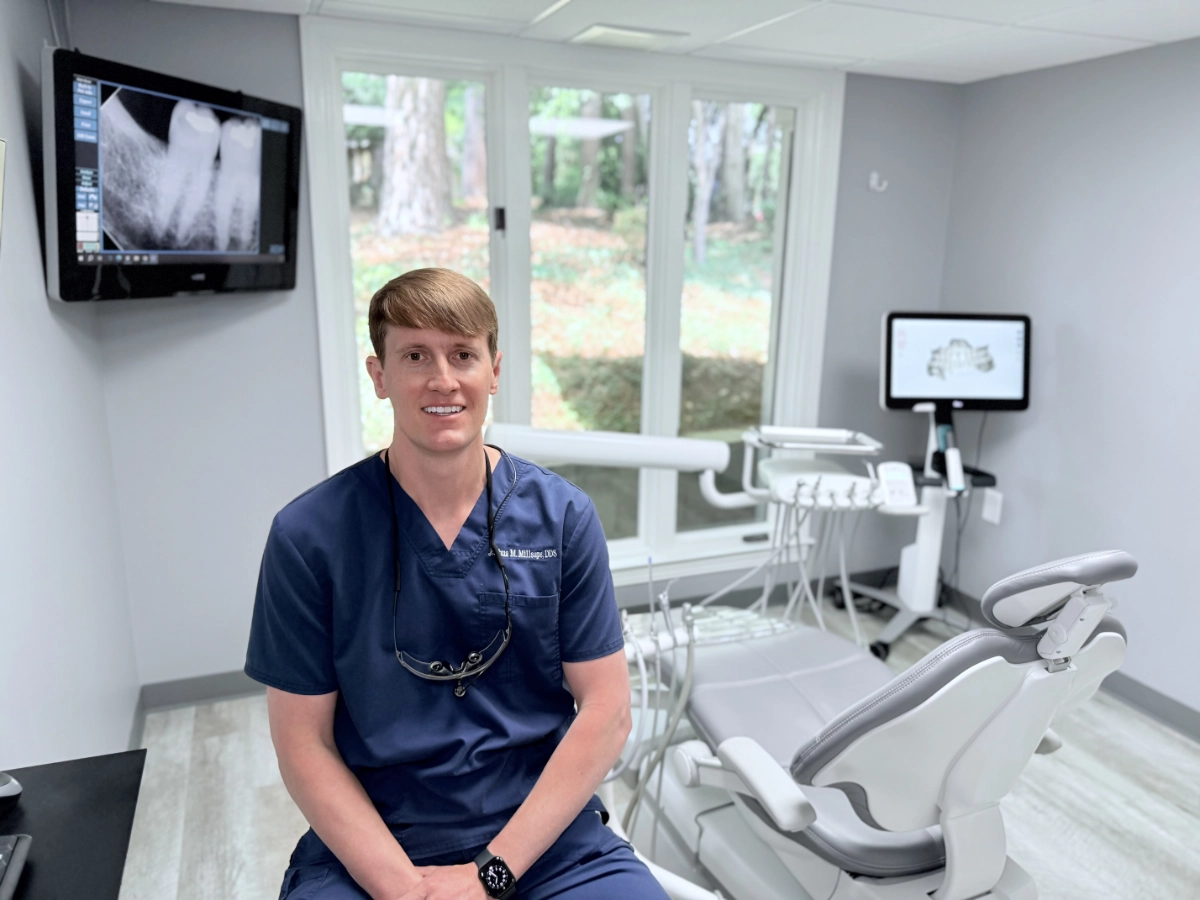
For patients who prefer not to alter healthy adjacent teeth, an implant-supported bridge is also an excellent option. This approach uses dental implants as anchors instead of natural teeth, preserving the neighboring tooth structure entirely. Dr. Millsaps will help you evaluate which type of bridge best suits your specific anatomy, oral health, and goals.
Types of Dental Bridges
Traditional bridges — anchored by crowns on both sides of the gap — are the most common type and are suitable for most tooth replacement scenarios. Cantilever bridges are used when there is only one natural tooth adjacent to the gap and can anchor the bridge on just one side. Maryland bridges use a metal or resin framework that bonds to the backs of adjacent teeth, making them a more conservative option that requires less tooth preparation — though they are typically only recommended for front teeth where biting forces are lighter. Implant-supported bridges replace multiple missing teeth using implants rather than natural teeth as anchors, delivering superior stability, bone preservation, and longevity. During your consultation at Hickory Dentistry, Dr. Millsaps will evaluate your specific situation and recommend the type of bridge that will deliver the best long-term result for your smile and your oral health.
Caring for Your Dental Bridge
A dental bridge requires the same basic care as your natural teeth — brushing twice daily and flossing regularly — with one important addition: cleaning beneath the bridge. Because the pontic (artificial tooth) sits against the gum but is not anchored into it, food particles and bacteria can accumulate in that space if not addressed. We’ll show you how to use a floss threader or water flosser to clean effectively under the bridge and around the abutment crowns. Regular dental checkups at Hickory Dentistry allow us to monitor the bridge, assess the health of the abutment teeth and surrounding gum tissue, and catch any early signs of wear, loosening, or decay before they compromise the restoration. With excellent home care and consistent dental visits, your bridge can serve you beautifully for many years.
Why Choose Hickory Dentistry for Dental Bridges in Hickory, NC?
Patients throughout Hickory, NC and the surrounding area trust Hickory Dentistry for dental bridges because we combine clinical excellence with a genuinely personalized approach to care. Dr. Millsaps takes the time to understand your needs and goals, evaluate all available options — including bridges versus implants — and recommend the solution that best serves your long-term oral health. We use advanced digital impressioning and imaging technology to ensure precise fit and superior outcomes. If you’re ready to restore your smile, call (828) 322-2977 or request an appointment online today.
Frequently Asked Questions — Dental Bridges in Hickory, NC
How long does it take to get a dental bridge?
Getting a dental bridge typically requires two appointments spaced two to three weeks apart. At the first visit, the abutment teeth are prepared, impressions are taken, and a temporary bridge is placed. At the second visit, the permanent bridge is fitted and permanently cemented. The total process from start to finish is generally three to four weeks, though this may vary depending on the complexity of your case and the fabrication time at the laboratory.
Is a dental bridge or dental implant the better option?
Both are excellent solutions, but they serve different needs. A dental bridge is typically faster, less invasive, and more affordable upfront — it’s a great choice for patients who want a reliable, attractive restoration without surgery. A dental implant preserves the adjacent teeth, prevents bone loss, and can last a lifetime — making it the superior long-term investment for many patients. Dr. Millsaps will evaluate your oral health, bone structure, budget, and preferences to help you decide which option is the best fit for your situation.
Does getting a dental bridge hurt?
The bridge preparation process is performed under local anesthesia, so you should feel little to no discomfort during the appointment. Some mild sensitivity around the prepared teeth and gums is normal for a few days after each appointment and typically resolves on its own. Over-the-counter pain relievers and avoiding very hot or cold foods during this period can help manage any temporary sensitivity. Our team will give you thorough aftercare instructions and is always available to answer questions during your recovery.
How long does a dental bridge last?
With proper care, a dental bridge typically lasts 10 to 15 years — and often longer. The longevity of your bridge depends on the health of the abutment teeth, your oral hygiene habits, your diet, and how consistently you attend regular dental checkups. Patients who clean carefully under and around their bridge, avoid chewing ice or very hard foods, and come in for regular exams at Hickory Dentistry tend to get the most years from their restoration.
Will my dental bridge look natural?
Yes — modern dental bridges are fabricated from high-quality, tooth-colored materials such as porcelain and zirconia that closely mimic the appearance of natural tooth enamel. Dr. Millsaps and our laboratory partner carefully match the shade, shape, and translucency of your bridge to your surrounding teeth, so the result looks completely natural. Most patients find that their friends and family cannot tell the difference between their bridge and their natural teeth.
Can a dental bridge be replaced if it wears out?
Yes — if a bridge has reached the end of its functional lifespan, it can be removed and replaced with a new one. Depending on the condition of the abutment teeth at that point, we may also discuss whether transitioning to a dental implant would be a better long-term option. During your regular visits at Hickory Dentistry, we monitor your bridge closely so that any issues are caught early and addressed before the bridge fails unexpectedly.
Do you provide dental bridges for patients from Newton, Lenoir, and Granite Falls?
Hickory Dentistry welcomes patients from Hickory, NC and all surrounding communities — including Newton, Lenoir, Granite Falls, Conover, and beyond — for dental bridge consultations and treatment. If you’re missing one or more teeth and want to explore your options, call us at (828) 322-2977 or request an appointment online. We’ll take the time to understand your needs and help you find the restoration that’s right for your smile and your life.