
Gum Grafting in Hickory, NC
Receding gums expose sensitive tooth roots, increase the risk of decay, and can ultimately threaten the stability of your teeth if left untreated. At Hickory Dentistry in Hickory, NC, our gum grafting treatment rebuilds lost gum tissue, protects your roots, and restores a healthy, natural-looking gumline. Call (828) 322-2977 to schedule your gum recession evaluation today.
Gum Grafting for Gum Recession in Hickory, NC
Gum recession — the gradual pulling back of gum tissue from the tooth surface, exposing the root — is one of the most common consequences of periodontal disease, though it can also result from aggressive brushing habits, genetics, tobacco use, or orthodontic treatment. Many patients don’t notice recession until it has progressed significantly, because the process is typically slow and painless in its early stages. By the time tooth sensitivity to hot, cold, or touch develops, or the teeth visibly appear longer than they once did, meaningful gum tissue has often already been lost.
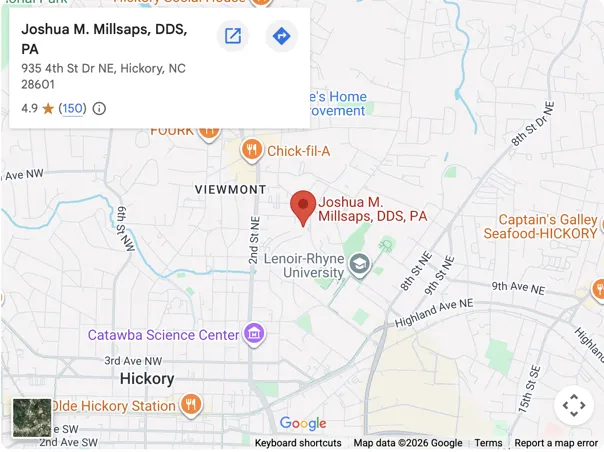
At Hickory Dentistry in Hickory, NC , we offer gum grafting as a highly effective treatment for patients who have experienced significant gum recession. The procedure rebuilds the gumline, covers exposed root surfaces, and stops further recession — protecting your teeth and restoring your smile’s natural appearance. We serve patients from Hickory, NC and surrounding communities including Newton, Lenoir, Granite Falls, and Conover who are looking for expert, compassionate periodontal care.
Why Gum Recession Should Be Treated Promptly
Exposed tooth roots are significantly more vulnerable to decay than the enamel-covered portions of your teeth. Root surfaces lack the protective enamel layer that covers the crown of the tooth, making them softer and more susceptible to acid erosion and bacterial attack. Root decay can progress rapidly and is often more difficult to treat than decay in the enamel. Beyond decay risk, exposed roots cause significant sensitivity — many gum recession patients experience sharp, uncomfortable reactions to cold air, cold or hot drinks, and sweet foods. Left untreated, progressive recession continues to strip gum tissue and eventually compromises the bone support surrounding the tooth, increasing the risk of tooth loss. Gum grafting halts this progression and reverses its effects before more serious consequences develop.
Types of Gum Grafts
There are three main types of gum grafts, and the most appropriate choice depends on your specific anatomy and the extent of recession being treated. A connective-tissue graft is the most commonly performed type: a small flap of tissue is created on the roof of the mouth (palate), and the tissue from beneath this flap — the connective tissue — is harvested and sutured over the area of recession. This approach provides excellent root coverage with minimal impact on the palatal donor site. A free gingival graft is similar but uses tissue taken directly from the surface of the palate, making it slightly thicker and particularly useful for patients who need to build up the thickness of gum tissue around the affected teeth. A pedicle graft uses tissue taken from the gum adjacent to the recession site, rotating or sliding it over to cover the exposed root — this approach is ideal when there is sufficient healthy tissue immediately beside the area being treated. Dr. Millsaps will evaluate your gum tissue, discuss the pros and cons of each approach, and recommend the type of graft best suited to your individual anatomy and goals.
What to Expect During and After Gum Grafting
Gum grafting is performed under local anesthesia, so you won’t feel pain during the procedure itself. Dr. Millsaps carefully harvests the donor tissue and precisely sutures it over the recipient site, where it will integrate with the existing gum tissue over the following weeks. The procedure typically takes one to two hours depending on how many teeth are being treated. After the procedure, you’ll be given detailed aftercare instructions: eating only soft foods for the first one to two weeks, avoiding vigorous rinsing or touching the surgical site, and following specific oral hygiene steps to protect the healing graft. Some soreness at both the donor site and the graft site is normal and manageable with prescribed or over-the-counter pain medication. Most patients are comfortable enough to return to work and normal light activities within a day or two. Full healing of the graft takes approximately two to four weeks, and final results — including the full extent of root coverage achieved — are typically assessed at a follow-up visit six to eight weeks after the procedure.
Benefits of Gum Grafting
The benefits of a successful gum graft extend well beyond aesthetics. By covering exposed root surfaces, grafting dramatically reduces tooth sensitivity — many patients notice significant relief within weeks of surgery. The rebuilt gumline provides renewed protection against root decay. The restored tissue halts further recession, protecting the bone and tooth stability for the long term. And from an aesthetic standpoint, teeth that appeared long, uneven, or “toothy” due to recession look naturally proportioned and healthy once the gumline has been restored. For patients who are considering cosmetic dental treatments like veneers or whitening, addressing gum recession first ensures the cosmetic work is done on a healthy, stable foundation.
Why Choose Hickory Dentistry for Gum Grafting in Hickory, NC?
Gum grafting is a procedure that rewards precision, experience, and genuine attention to patient comfort — and that’s exactly what Hickory Dentistry delivers. Dr. Millsaps has performed gum grafting procedures for patients throughout Hickory, NC and the surrounding region, combining technical skill with a patient-first approach that keeps you informed, comfortable, and confident at every stage. Our team is committed to thorough pre-procedure consultation, careful execution, and attentive follow-up care to ensure your graft heals beautifully and your results last. If you’re experiencing gum recession or have been told you may need a gum graft, call (828) 322-2977 or request an appointment online today — your gum health is worth protecting.
Frequently Asked Questions — Gum Grafting in Hickory, NC
How do I know if I need a gum graft?
Signs that you may need a gum graft include visible gum recession (your teeth appearing longer than they used to), increased tooth sensitivity to cold, heat, or touch, root surfaces that are visibly exposed, or a diagnosis of gum recession from a dental exam. Not all recession requires grafting — mild cases may be managed with improved oral hygiene and monitoring. Dr. Millsaps will evaluate the extent of your recession and recommend grafting when the degree of tissue loss warrants treatment to prevent further progression and damage.
Is gum grafting painful?
The gum grafting procedure is performed under local anesthesia, so you should feel no pain during surgery. Afterward, soreness at both the graft site and the donor site on the palate is normal for about one to two weeks and is effectively managed with prescription or over-the-counter pain relievers. Most patients are surprised at how well they tolerate the recovery. Eating soft foods, following our care instructions carefully, and resting for the first day or two significantly improves comfort during healing.
How successful is gum grafting?
Gum grafting has a very high success rate — typically well above 90% — when performed by an experienced provider on appropriate candidates. The graft integrates with the existing tissue and, once healed, functions as natural gum tissue. Success depends on following post-procedure care instructions carefully, maintaining excellent oral hygiene, and identifying and addressing the underlying cause of recession — whether that’s gum disease, aggressive brushing, or another factor — to prevent future recession from occurring.
How long does it take to recover from gum grafting?
Most patients are comfortable enough to return to work and light activities within one to two days. A soft food diet is recommended for one to two weeks to protect the healing site. Full tissue integration and healing takes approximately two to four weeks, with final results assessed at a follow-up appointment six to eight weeks after surgery. The donor site on the palate also heals within this timeframe. Our team at Hickory Dentistry provides detailed instructions and is always available to answer questions during your recovery.
Can gum grafting fix tooth sensitivity caused by recession?
Yes — one of the most significant and immediate benefits patients experience after gum grafting is a reduction in tooth sensitivity. By covering the exposed root surfaces with new gum tissue, grafting restores the protective barrier that recession had removed. Many patients report dramatic improvement in sensitivity to cold, heat, and sweet foods within weeks of the procedure. Combined with the long-term protection against root decay and further recession, sensitivity relief is one of the most compelling reasons patients pursue gum grafting.
Does gum grafting affect the appearance of my smile?
In almost all cases, gum grafting significantly improves the appearance of the smile for patients who had noticeable recession. Teeth that appeared unusually long or uneven due to receding gums look more naturally proportioned once the gumline is restored. The grafted tissue, once healed, blends naturally with the surrounding gum tissue and is generally indistinguishable from the original tissue. For patients interested in additional cosmetic improvements, gum grafting pairs well with cosmetic dentistry treatments after healing is complete.
Do you perform gum grafting for patients from Newton, Lenoir, and Granite Falls?
Hickory Dentistry provides gum grafting and all periodontal services to patients from Hickory, NC and surrounding communities including Newton, Lenoir, Granite Falls, Conover, and beyond. If you’re experiencing gum recession and want to explore your treatment options, call us at (828) 322-2977 or request an appointment online. The sooner recession is addressed, the better the outcome — we’re here to help.